One Roof, Four Stations: How a TitanWatt PSU Is Built
Every CRPS power supply we ship passes through four in-house stages — SMT+DIP assembly, automated electrical test (ATE), burn-in aging, and safety compliance verification. We describe our capability the honest way: by production-line configuration and process discipline, not by decorated output counters. What you can verify on a visit is the same chain that builds your engineering samples and your production volume, which is why batch consistency is a property of the line, not a promise in an email.
SMT + DIP Mixed-Process Lines
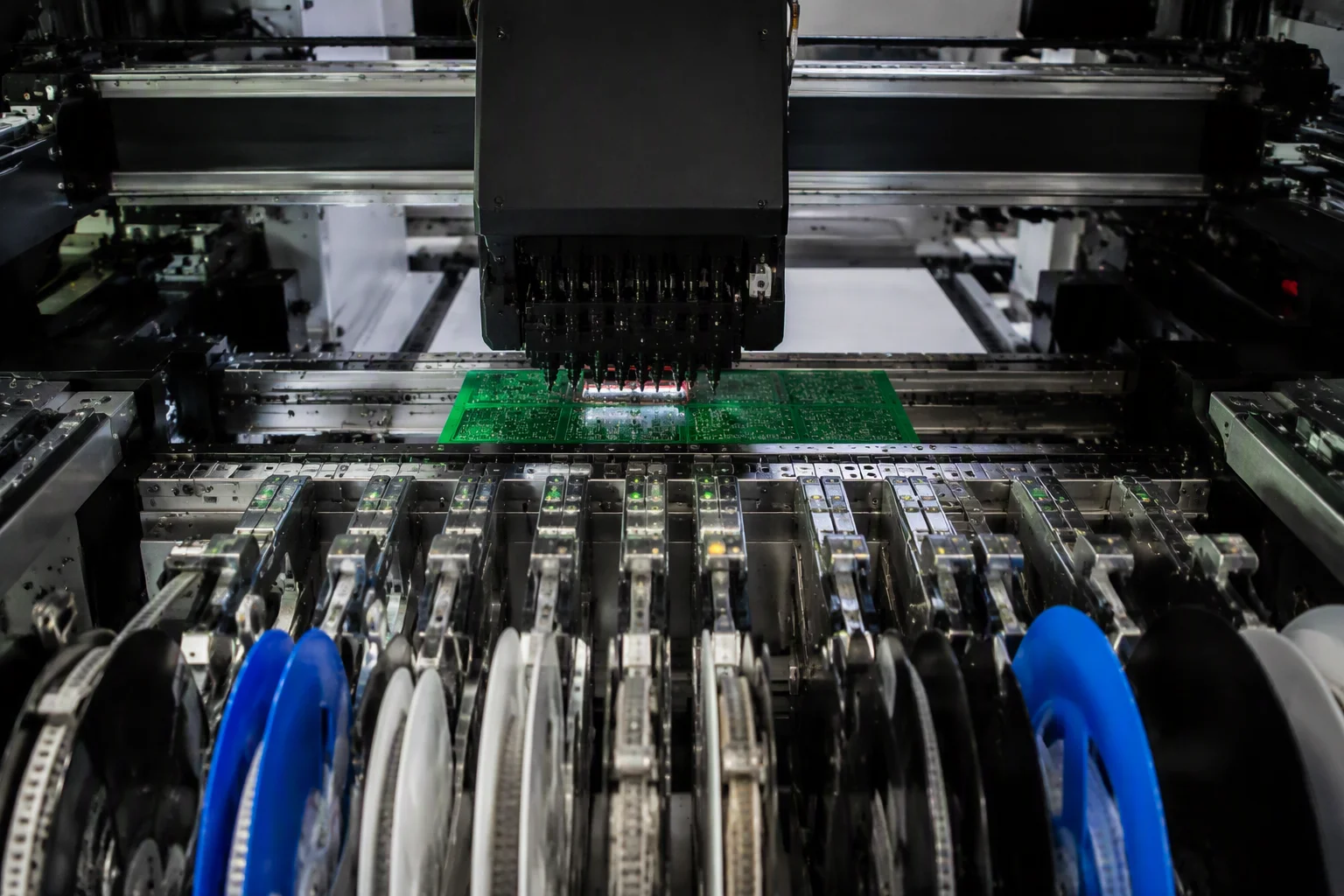
A server power supply board is two technologies in one: dense surface-mount control circuitry on both sides, and heavy through-hole components — transformers, electrolytic capacitors, PFC chokes, heatsink assemblies — that carry kilowatts of power. Our mixed SMT+DIP lines handle both on one flow: solder-paste printing and pick-and-place for the control section, followed by wave and selective soldering for the power stage.
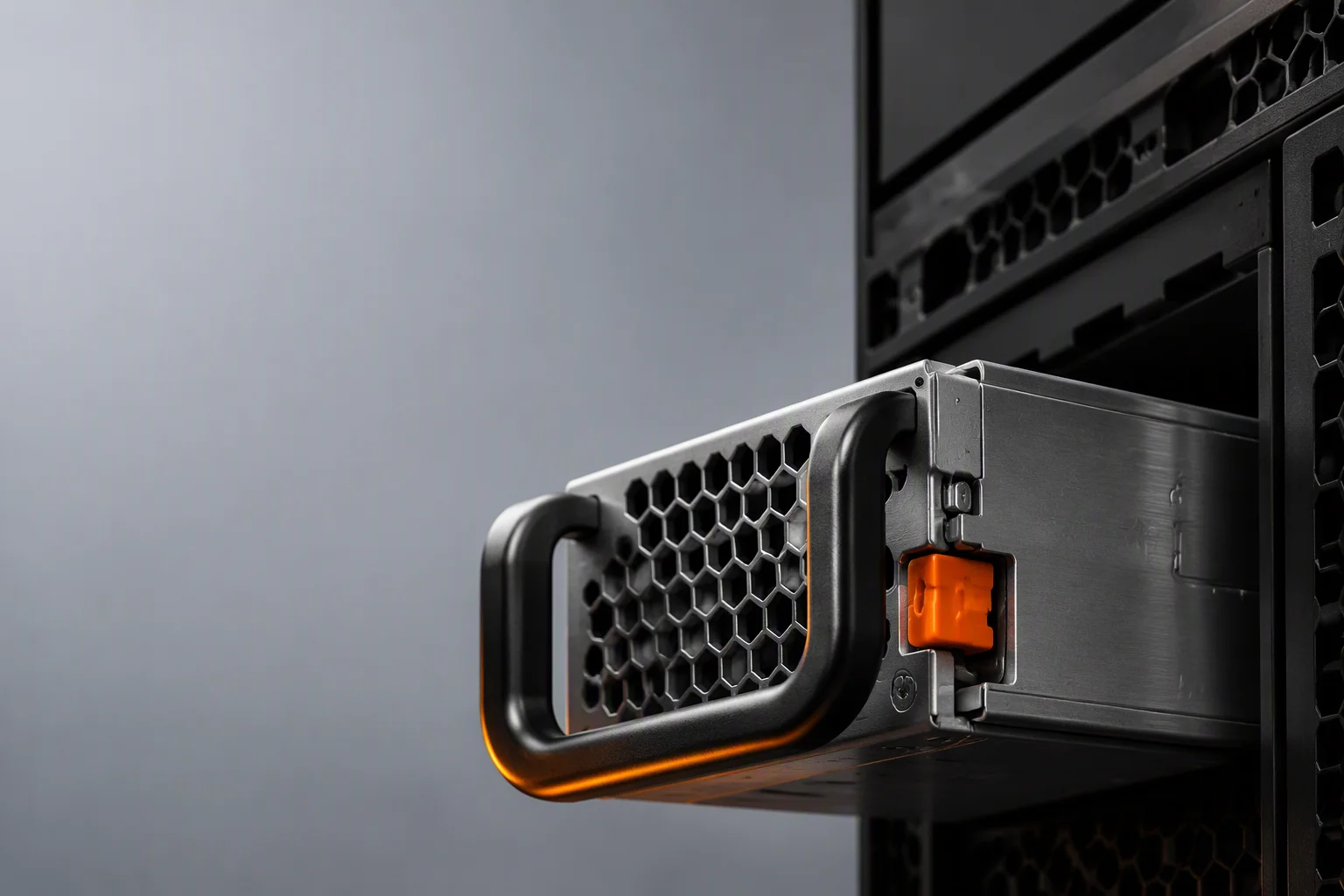
Process controls focus on the joints that fail in the field: solder paste inspection before reflow, AOI after placement, and controlled torque and thermal profiles on the through-hole power devices. The CRPS golden-finger interface — the edge connector that must mate with your motherboard slot within tight tolerance — is checked dimensionally at this station, because a 73.5×40×185mm module leaves no room for a sloppy fit.
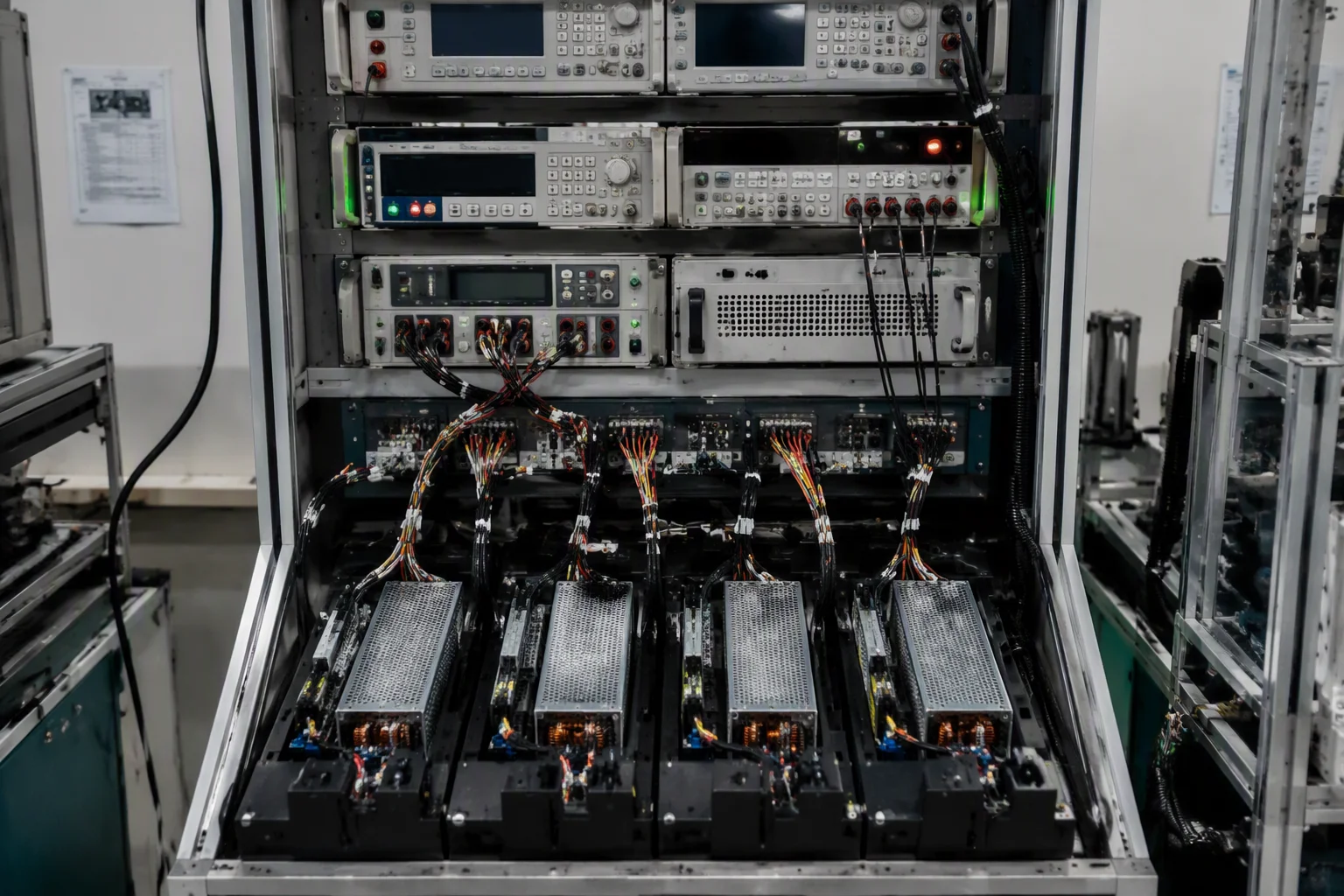
ATE — Automated Electrical Test
Every unit, not a sample, goes across automated test equipment. The ATE sequence verifies the numbers on the datasheet against the unit in front of it: efficiency at the 10/50/100% load points against the 90/96/91% Titanium gate, output voltage regulation on each rail, ripple and noise, OVP/UVP/OCP/OTP and fan-fault protection trip points, power-good and PS-kill signaling, and the PMBus 1.2 command surface — reading back voltage, current, temperature and fan-speed registers before the unit ever reaches your rack.
Because the test is automated and parameterized per SKU, a 550W enterprise unit and a 2400W high-density unit run the same gate with different limits, and every serial number leaves a test record behind it.
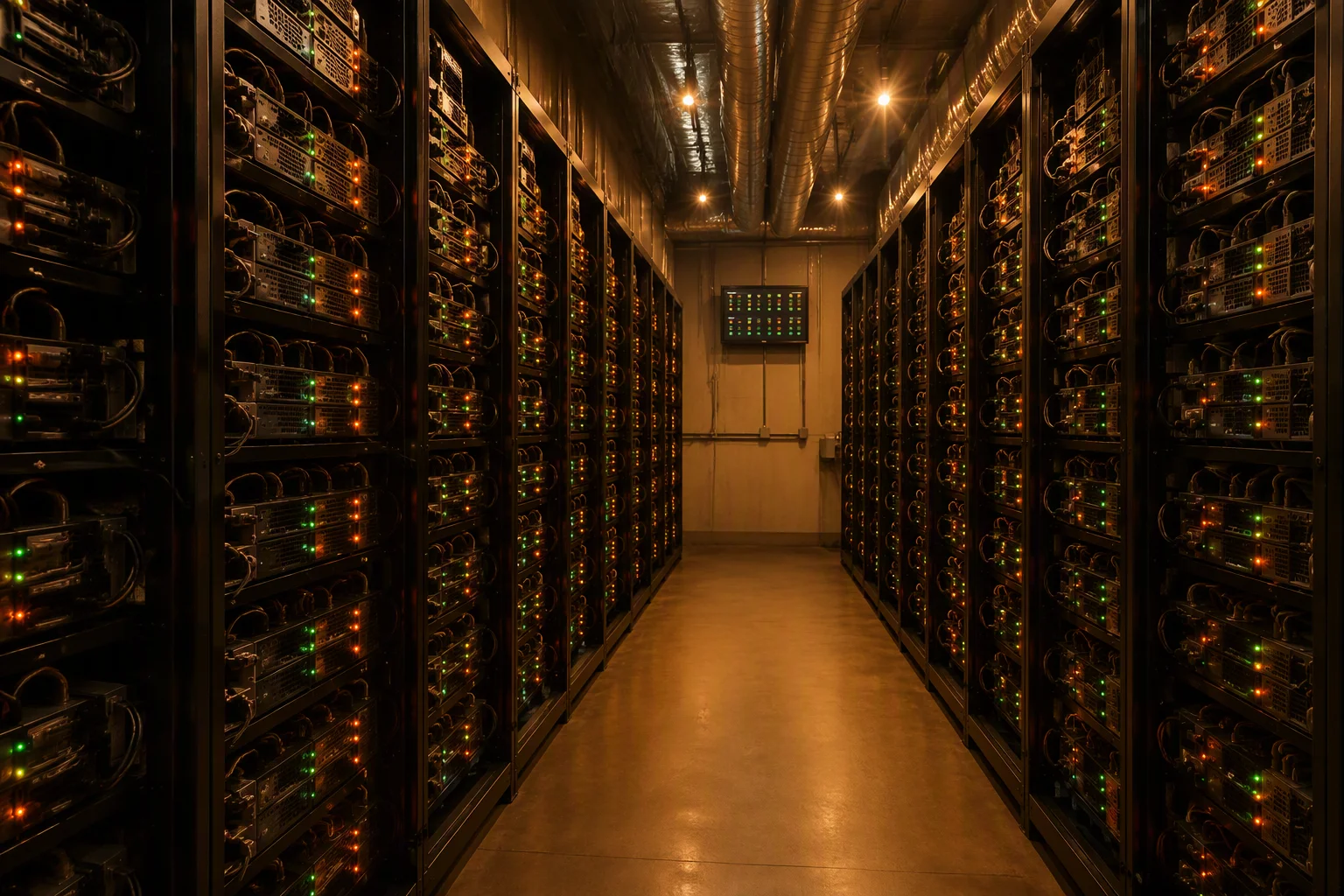
Burn-In Aging Rooms
Infant-mortality failures show up in the first hours of stressed operation — which is exactly when you do not want them showing up in a customer rack mid-production run. Our burn-in rooms run production units under elevated temperature and controlled load for a specified aging cycle, with monitoring across the population so any drift cluster triggers a process review upstream at SMT or DIP.
Aging is also where the reliability claim gets exercised before it becomes a claim: the platform is engineered to a 250,000-hour MTBF target at 40°C ambient per Telcordia SR-332, and full output is specified continuously from -5°C to +55°C. Units exit burn-in into a cool-down and re-test gate at ATE before they are allowed to move to packing.
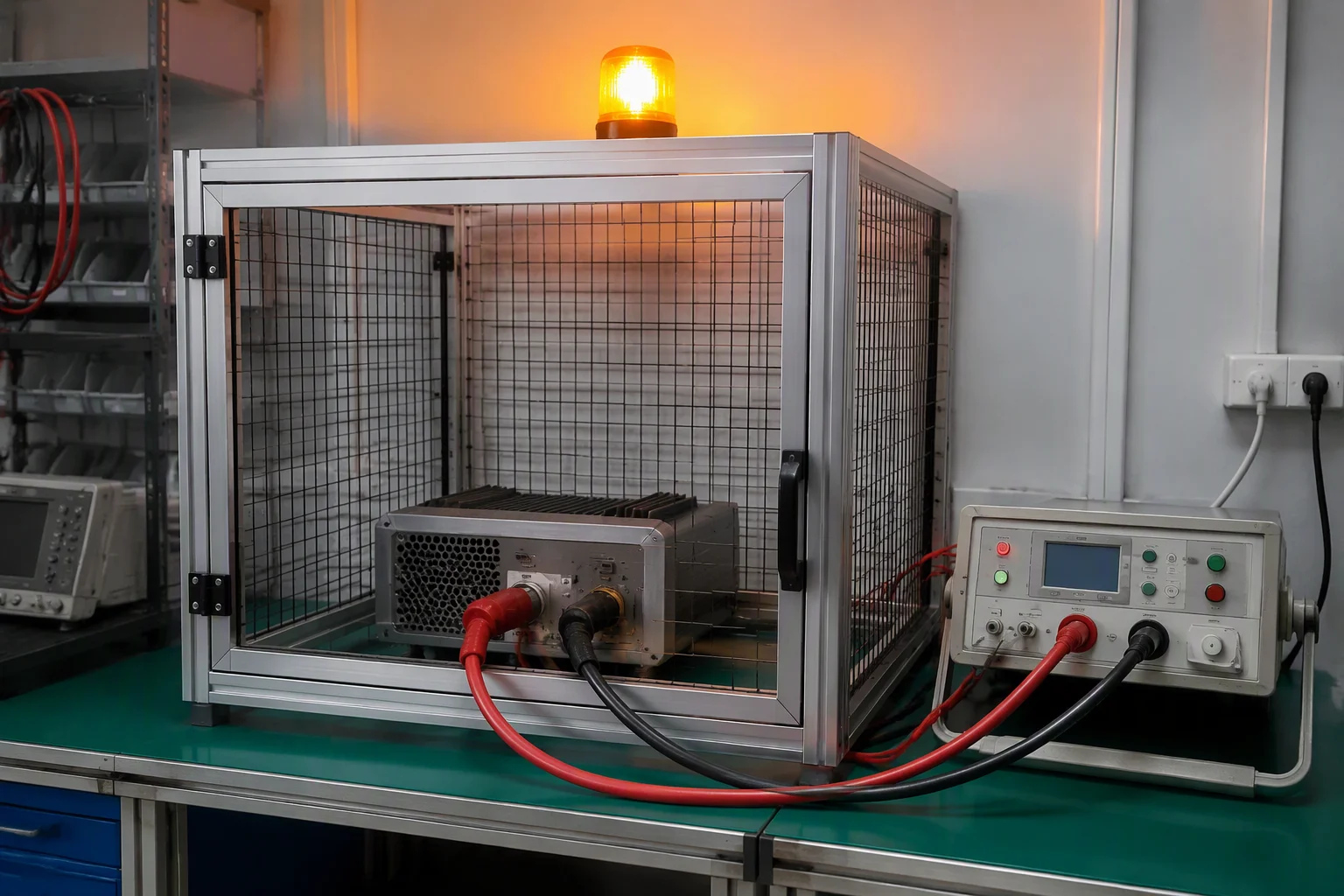
In-House Safety & Compliance Laboratory
The fourth station closes the loop between design and certification. Our laboratory performs routine safety verification — hi-pot (dielectric strength), ground-bond and leakage-current testing on every production lot — plus pre-compliance EMC scanning so design revisions are caught before they reach a certification body. This is what keeps certification maintenance a routine activity instead of a crisis.
The lab supports the platform's certification matrix: IEC/UL 62368-1 safety with CB-scheme reports, CE and UKCA marking, FCC Part 15 Subpart B, RoHS and REACH environmental compliance, and ISO 9001 governing the quality system itself. Regional certifications for specific target markets are handled per project. We state certification names and scope — certificate paperwork is shared with customers under NDA rather than published numbers.
Shenzhen Base, FOB Shipping
The factory sits in the Shenzhen manufacturing belt, an hour-class drive from Yantian port and Hong Kong airfreight hubs — the shortest practical path from burn-in exit to your receiving dock. Standard trade terms are FOB Shenzhen/Yantian, with CIF and DDP negotiable per project. Power supplies ship as ordinary goods (no battery content, no UN38.3 requirement) by sea or air; packaging is anti-static bag plus foam plus export carton, with a finished CRPS-185 unit at roughly 1.2kg.
Commercial parameters: standard-product MOQ of 100–500 units per order, samples in 2–4 weeks, production lead time of 6–10 weeks including burn-in. Buyers are welcome to audit the line — the four stations above are exactly what a visitor walks through.