Power for Telecom Cabinets & Edge Sites
Edge computing inherited two worlds and must live in both. The telecom plant it grows out of has run on -48Vdc battery-backed buses for decades; the data center architecture it is converging toward runs on 54V and hot-swap CRPS. Meanwhile the physical environment — street cabinets, cell-site huts, factory floors — is hotter, dirtier and less attended than any raised-floor suite. Power for this industry has to bridge the voltage eras and survive the weather at the same time.
Three Constraints the Rack Room Never Sees
Two voltage eras, one site
A single edge deployment often mixes -48Vdc rectifier plants feeding legacy transport gear with modern 54V compute on the same footprint. The power design has to respect the polarity and battery-bank behavior of the -48V world while delivering Titanium-class efficiency for the compute side — no single architecture covers both by default, so coexistence must be engineered, not assumed.
Temperature swings from -5 to +55°C
A cabinet in direct summer sun can exceed 50°C internally; a winter night can pull it below freezing. Supplies rated only for the 0-45°C office envelope derate or shut down exactly when the site is most stressed. Our units hold continuous output across -5 to +55°C, which is the difference between an edge node and an edge liability.
Nobody is on site when it fails
Unattended sites turn every marginal design choice into a truck roll. Margins on OCP trip points, fan-fail detection and surge tolerance that a data center would forgive become outages measured in drive-time hours. Protection hardening and conservative derating are the cheapest field service you will ever buy.
Numbers That Survive the Street
Wide-Temp CRPS with DC-Input Options
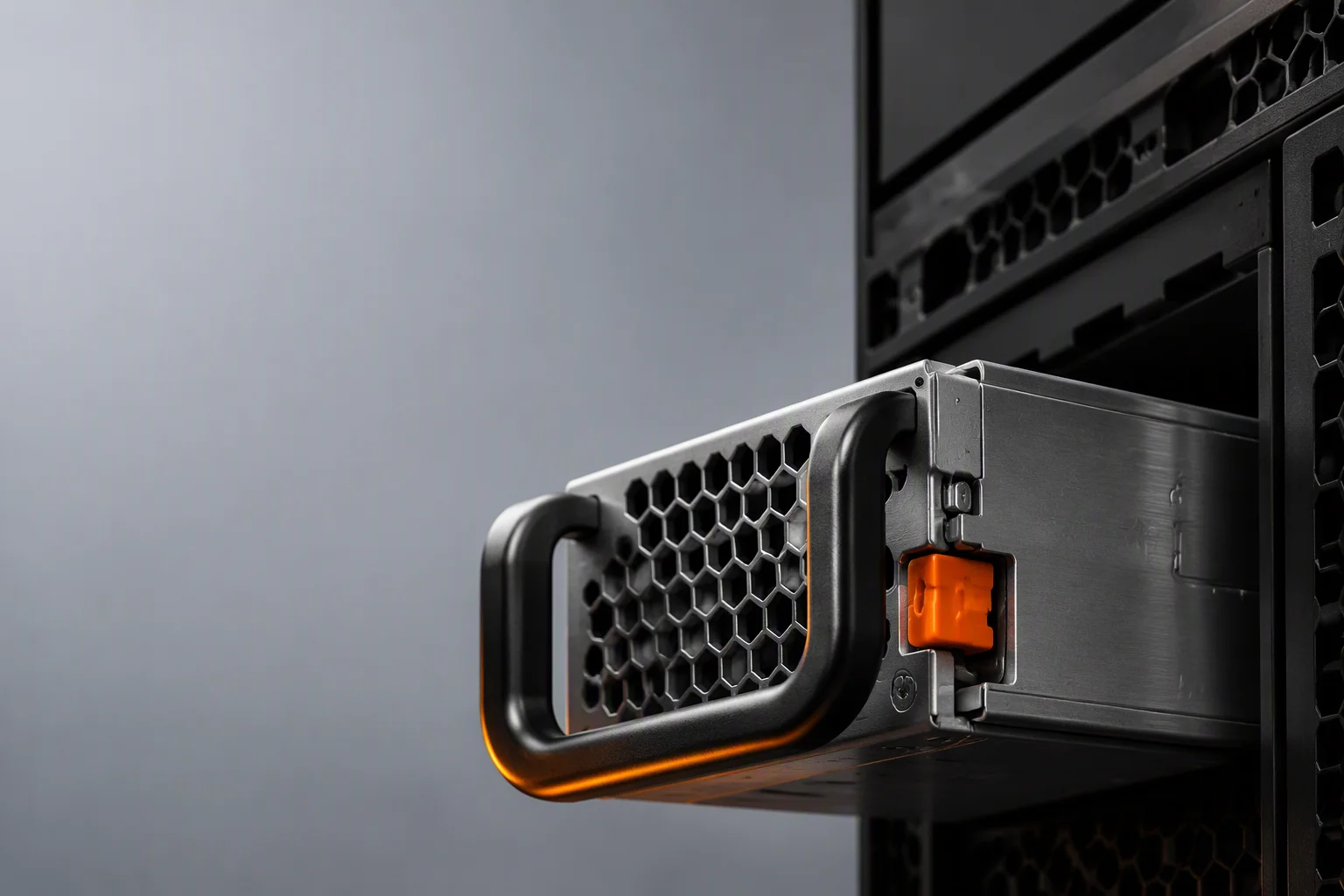
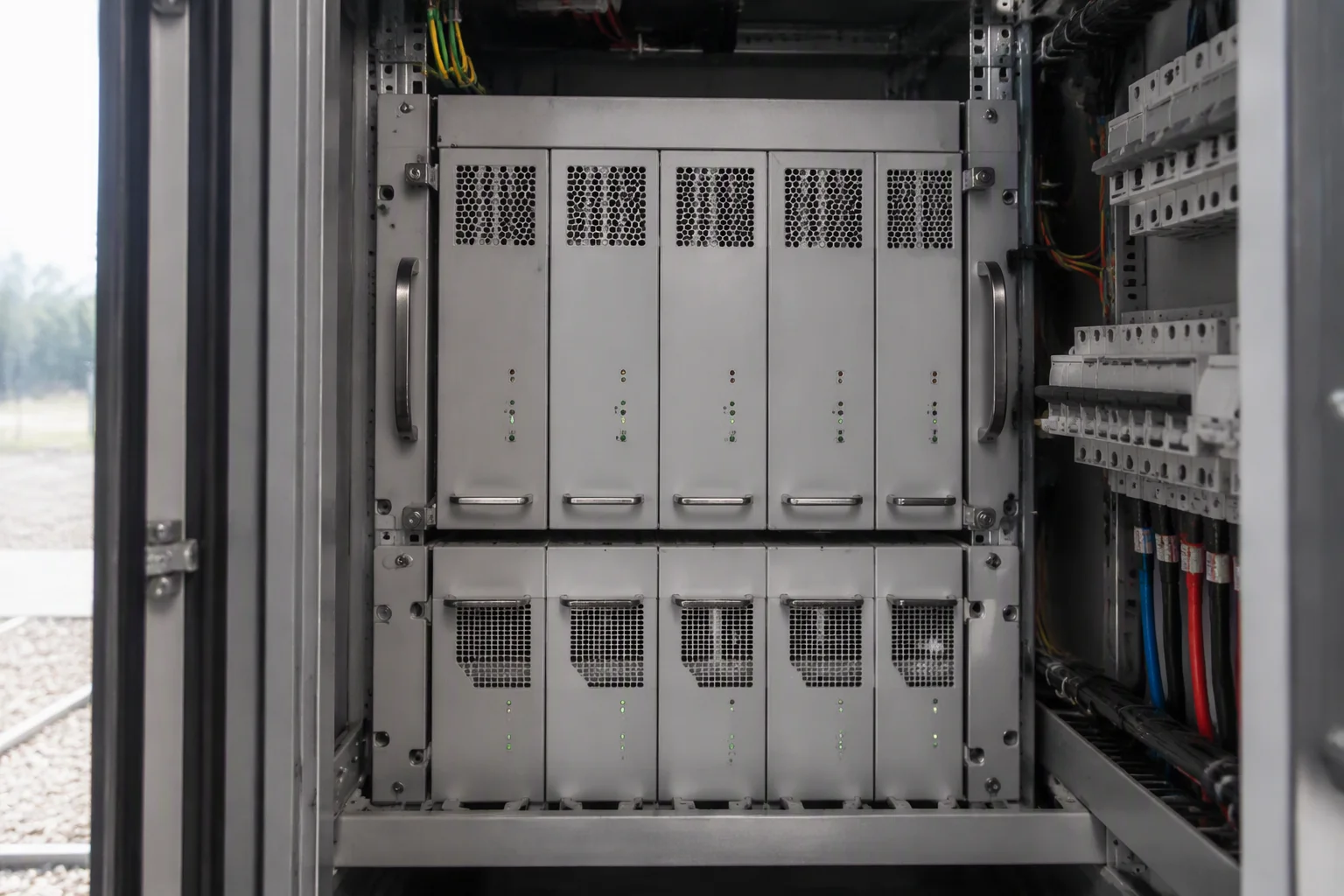
Our CRPS platform in the 550W to 1300W band is the backbone for edge compute shelves: standard 73.5×40×185mm modules, hot-pluggable N+1 with active current sharing, and the full five protections (OVP/UVP/OCP/OTP, fan-fail) with trip points set conservatively for sites where the first responder is a technician with a van. On smart variants, PMBus 1.2 telemetry over I²C reports per-module health to a remote NMS, so most site visits can be canceled before they are scheduled.
For the -48Vdc side of the site, we work with you on DC-input configurations that speak to the rectifier plant and battery bank correctly, alongside the 54V-ready distribution path for newer compute. Units are ATE-screened and loaded in the burn-in room before shipment, and conformance spans IEC/UL/EN 62368-1 with CB, CE/UKCA and FCC as baseline. Wide-temperature behavior is verified as design-in, not as a footnote derating chart.
By Site Type
| Site Type | Recommended Part | Configuration | Status |
|---|---|---|---|
| Street cabinet / cell-site edge compute | CRPS 550W / 800W | 1+1, -5~+55°C, hardened protection | In production |
| Edge micro data center / MEC shelf | CRPS 1300W | N+1, PMBus telemetry to remote NMS | In production |
| Dense edge or aggregation node | CRPS 1600W-2400W | N+1, C19 AC or DC-input option | In production |
Orders from 100–500 pcs; samples in 2–4 weeks, volume in 6–10 weeks including burn-in. DC-input variants are scoped with your rectifier plant specification.
Bridging -48V and 54V at the Edge?
Describe your site environment and legacy plant — we will propose a coexistence power layout and sample plan within 48 hours.