How TitanWatt Projects Actually Run
Three project studies, presented the way a serious buyer needs them: project type, the technical points that decided the outcome, and the current status. We anonymize deliberately — customer names, contract values and unit volumes stay confidential — because the engineering lessons are what transfer to your project, and because a supplier that publishes other customers' numbers will publish yours.

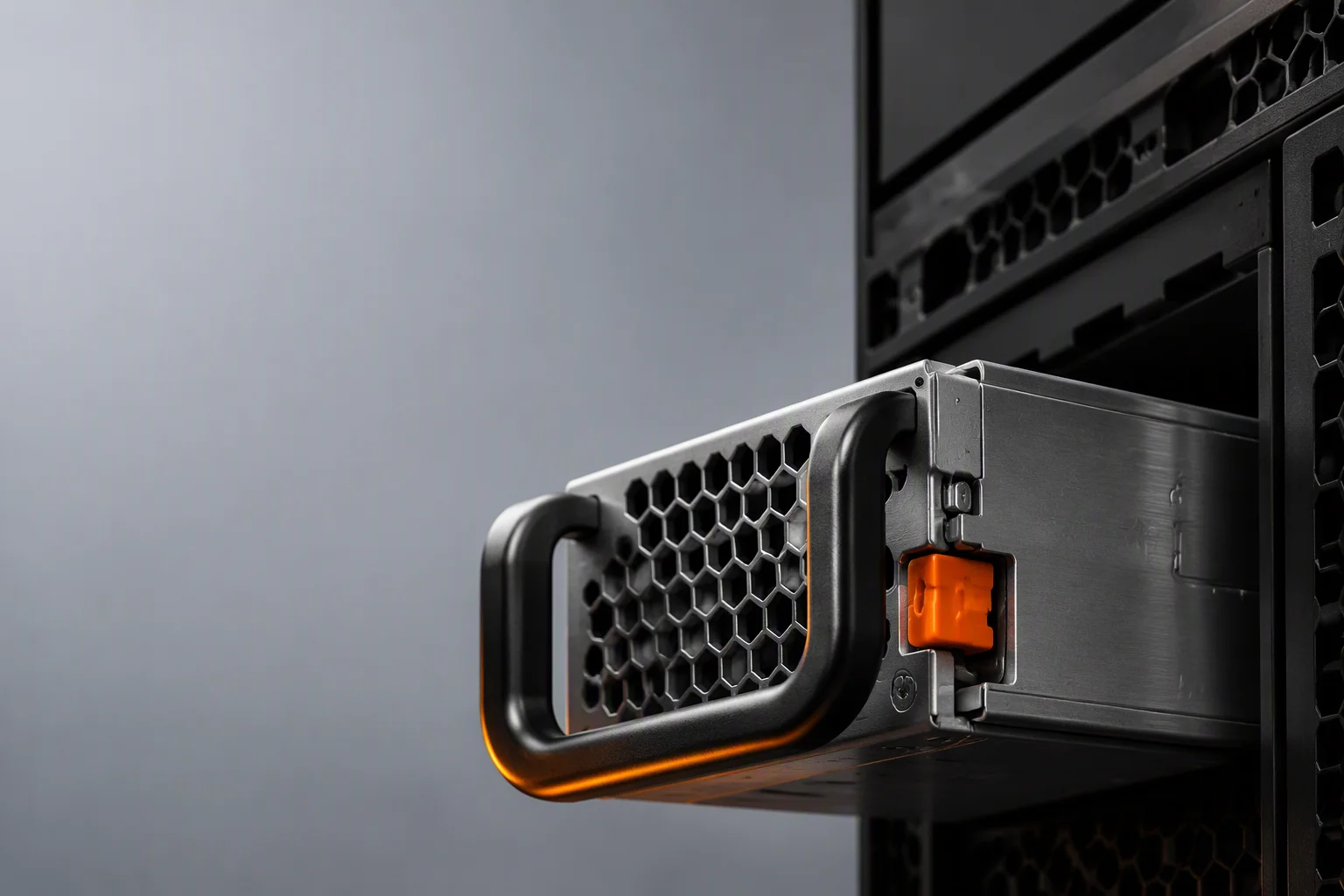
AI Cluster: 5.5kW M-CRPS Joint Evaluation
Project type: joint development and evaluation of 5.5kW M-CRPS modules (54V output stage) for a GPU-dense training cluster — currently at the development-samples stage, evaluated jointly with the customer's rack-integration team.
Technical points: the rack's power budget pushed past what 12V distribution could carry at acceptable busbar mass, so the program moved to a 54V bus — one-quarter the current, roughly 16× lower line losses. The evaluation focused on ORv3 slot compatibility of the modular output section, hot-swap behavior under full 5.5kW extraction, PMBus 1.2 telemetry integration with the customer's rack manager, and N+1 sequencing behavior at rack level. Burn-in data from our aging rooms fed directly into the customer's reliability model alongside the 250,000-hour Telcordia SR-332 MTBF target.
Status: development samples in joint evaluation; specification refinements from the evaluation feeding the DVT build. Development Samples
Enterprise Server: 800W CRPS in Volume Production
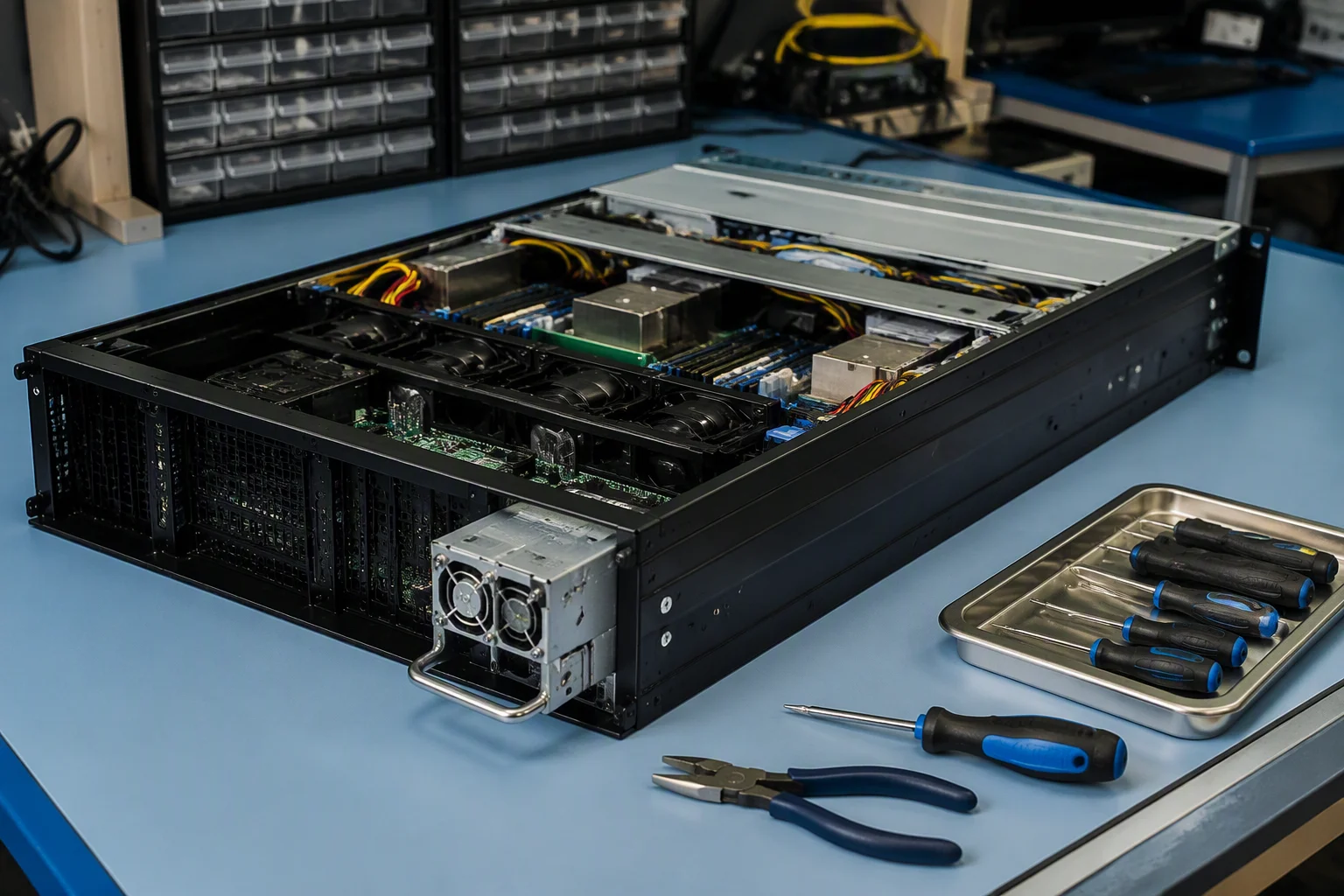
Project type: standard-platform customization and volume supply of an 800W CRPS Titanium unit (73.5×40×185mm, 12V main rails) for a 2U enterprise server line — a shipped, repeat-production program.
Technical points: the deciding issues were unglamorous, which is typical for enterprise programs. Chassis fit required dimensional iteration on the latch and handle clearance within the standard CRPS cage, plus confirmation of golden-finger alignment across the customer's two motherboard revisions. The firmware deliverable was a PMBus 1.2 register map matched to the customer's BMC sensor table, including warn-threshold defaults tuned for their acoustic target. Both power paths run active current sharing in the customer's N+1 configuration, with hot-swap replacement verified under load. Batch consistency across repeat orders was validated through the customer's incoming audit rather than taken on trust.
Status: in volume production on repeat orders. In Production
Storage: 1300W CRPS With Custom Airflow
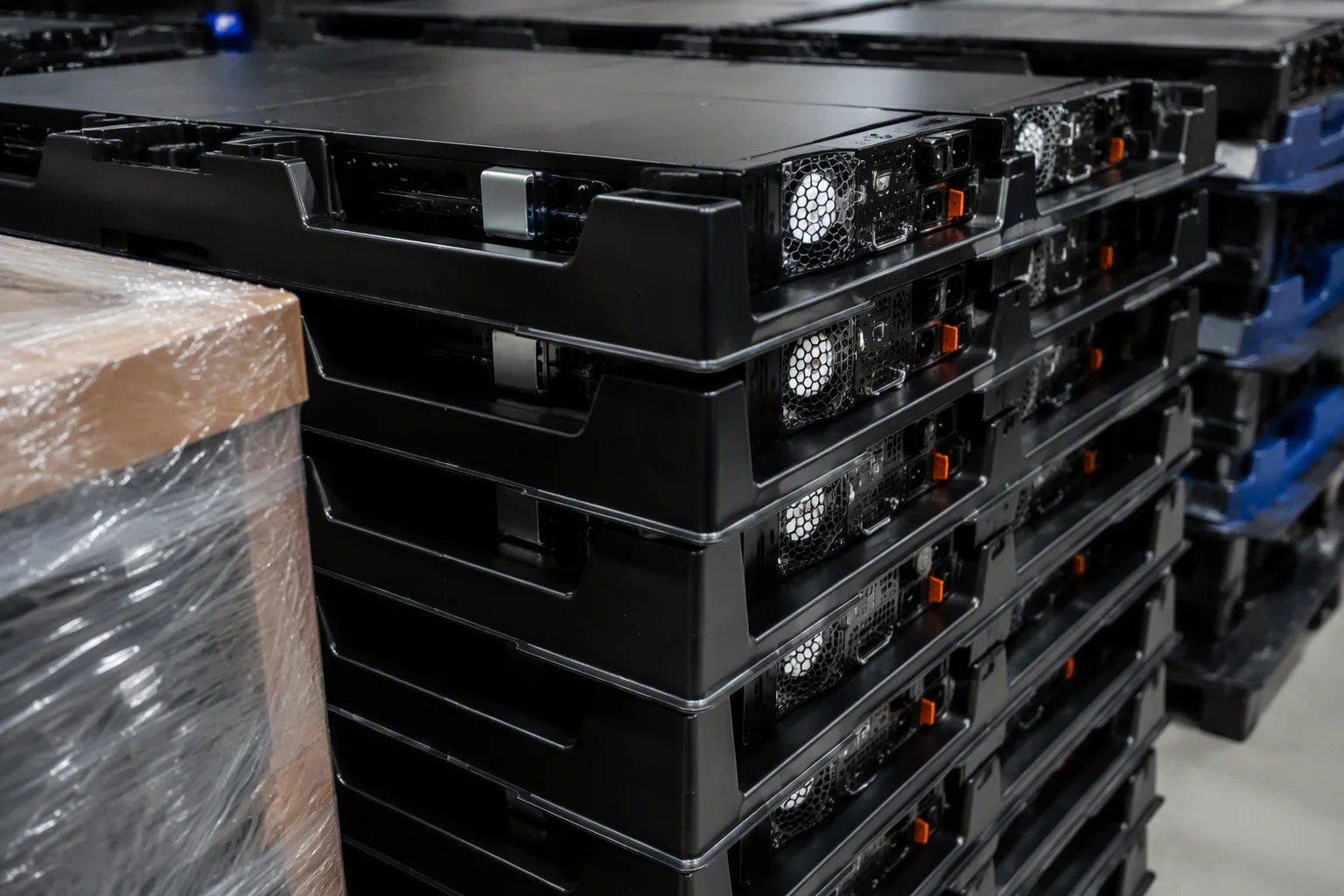
Project type: customization of a 1300W CRPS Titanium unit for a dense storage array that runs 7×24 at near-full load — a production program whose distinguishing requirement was thermal, not electrical.
Technical points: the customer's chassis drives airflow back-to-front, opposite to the standard module orientation, and the dense drive-backplane thermal load left little inlet margin. We qualified the unit with reversed airflow direction and a fan curve matched to the chassis controller's PWM profile, then verified sustained full output at the PSU-inlet temperature the bay actually sees — well above the room ambient — inside the -5°C to +55°C continuous spec. Electrical scope included dual power-path redundancy with active current sharing between modules, protection verification at OVP/UVP/OCP/OTP and fan-fault trip points, and PMBus telemetry wired into the array controller so drive-side thermal events and PSU-side thermal events are read on one timeline. Extended burn-in cycles were set above the standard screen because write-heavy storage loads live at full output continuously.
Status: in production with the customized thermal configuration. In Production
What These Projects Share
Fit and firmware first
The issues that stall programs are mechanical fit, pinout polarity and register maps — not topologies. Every program starts with chassis compatibility validation on your cage and your BMC.
Data, not assertions
Reliability inputs — ATE records, burn-in batches, MTBF targets per Telcordia SR-332 — come from our own production system, so your reliability model is fed with unit-level data.
Honest staging
Programs at the development stage are labeled as such — the AI cluster evaluation is development samples, the two production programs ship today. You always know which kind of project you are starting.