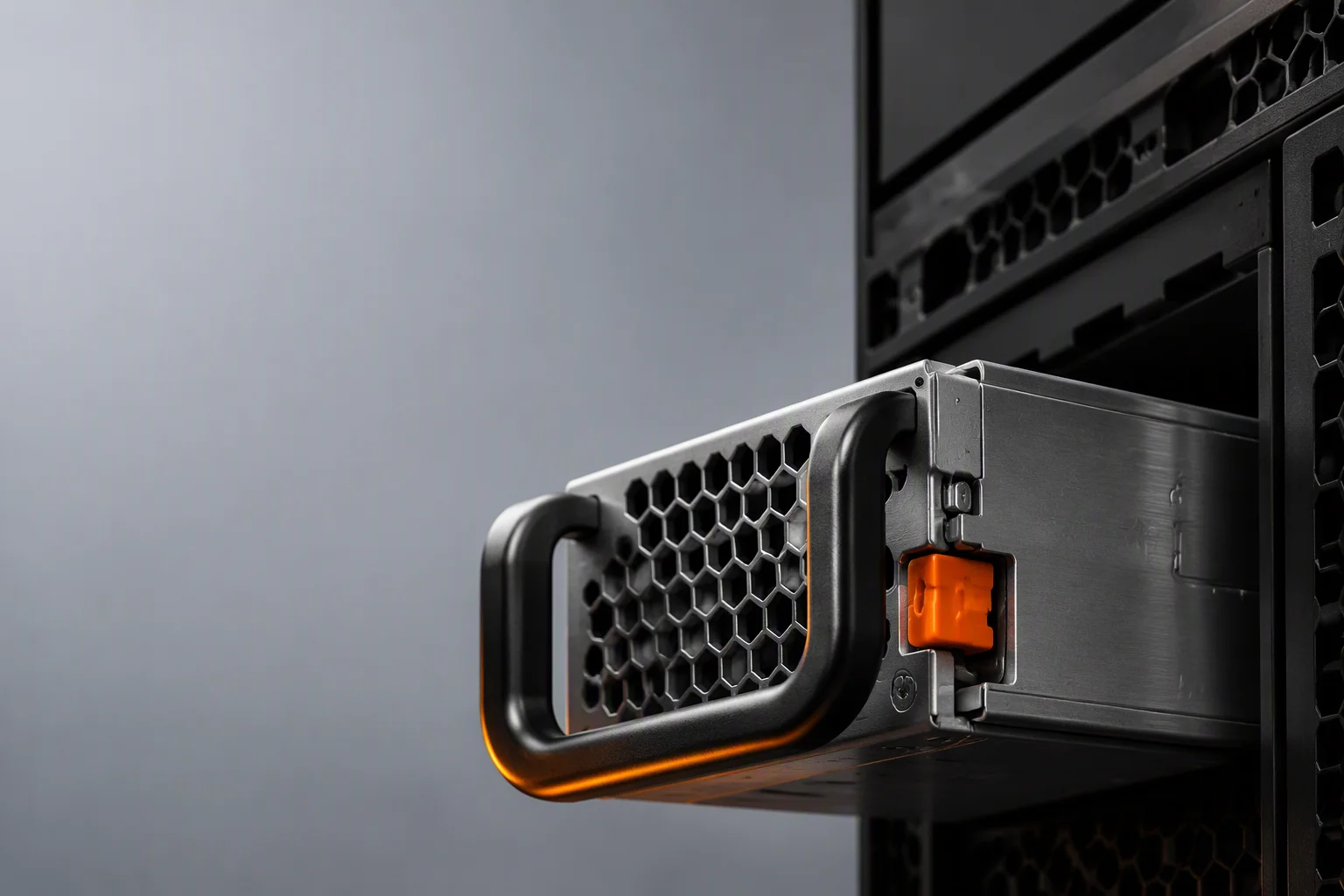
CRPS 1600W–2400W High-Density Titanium
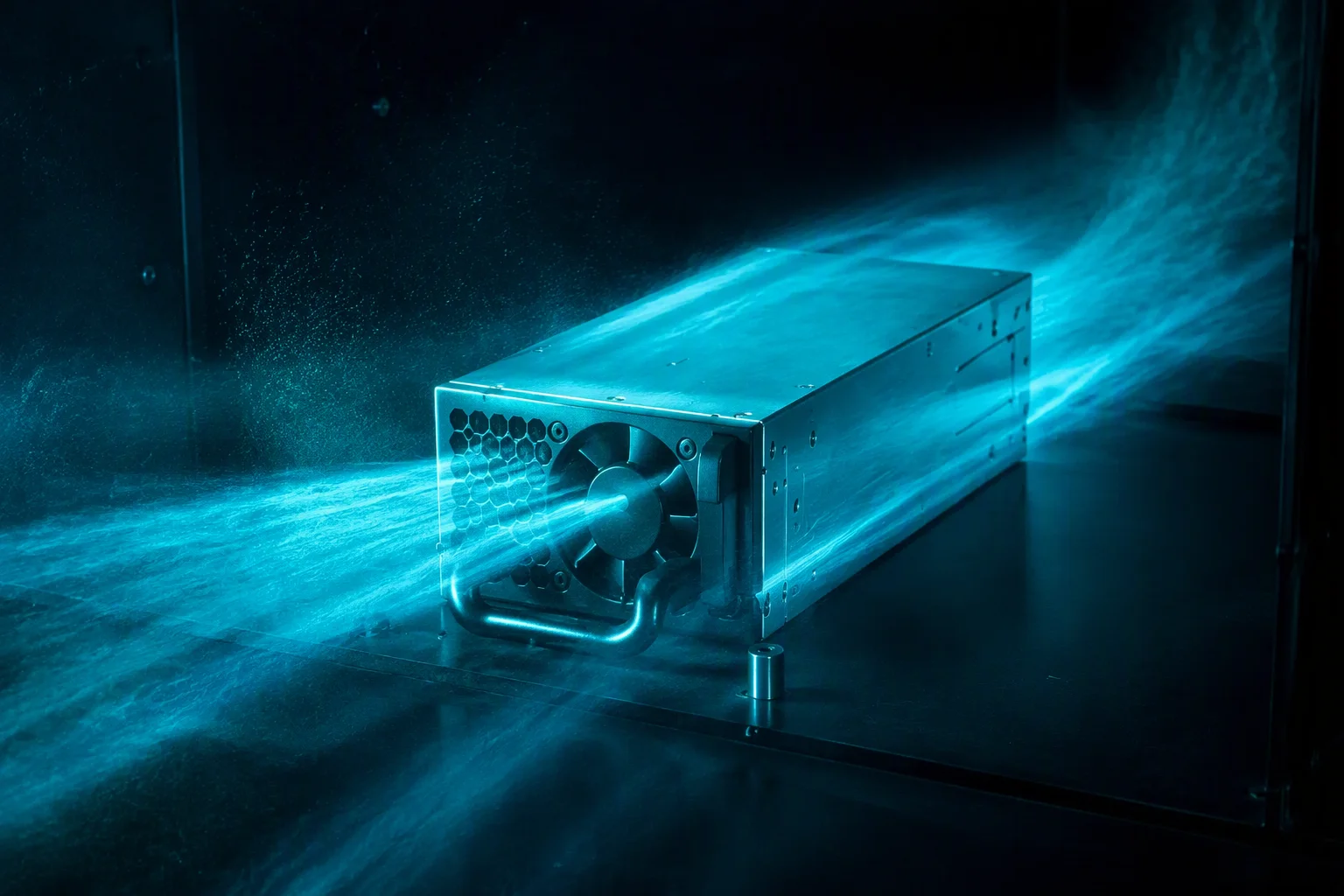
The top of our in-production ladder. At 1600W, 2000W and 2400W, these CRPS-185 modules pack 75 W/in³-class density into the same 1U envelope as an 800W unit a generation ago — fed by a C19 inlet at 200Vac and hardened for the front-end role in GPU nodes and high-availability storage. Everything here ships today: no asterisks, no roadmap language.
Series Specifications
| Parameter | Specification |
|---|---|
| Rated Power | 1600W / 2000W / 2400W continuous; full output from 200Vac input |
| Efficiency | 80 PLUS Titanium (230V internal redundant): 90% @10%, 96% @50%, 91% @100% |
| Input | 180–264Vac single phase, C19/C20 inlet, 50/60Hz; power-factor ≥ 0.95 @ 50% load |
| Output | 12V main rail, 12Vsb standby; active current sharing across parallel arrays |
| Power Density | 75 W/in³ class within 73.5 × 40 × 185 mm (CRPS-185, 1U hot-plug) |
| Cooling | High-static-pressure 40mm fan; front-to-back or back-to-front airflow option |
| Protection | OVP / UVP / OCP / OTP / fan-fault; latching with hot-swap auto-restart policy options |
| Telemetry | PMBus 1.2 over I²C — per-rail voltage/current, temperatures, fan speed, event logs |
| Hold-up Time | ≥ 12 ms at full load (typical) |
| Operating Temp | −5°C to +55°C continuous with derating curve above 45°C |
| Redundancy | N+1 / N+N hot-swap; cold redundancy and power throttling supported via PMBus |
| Reliability | MTBF ≥ 250,000 hrs @ 40°C (Telcordia SR-332); 100% burn-in before ship |
| Compliance | IEC/UL/EN 62368-1 with CB, CE, UKCA, FCC Part 15 Subpart B, RoHS 2.0, REACH |
Choose Your Rung
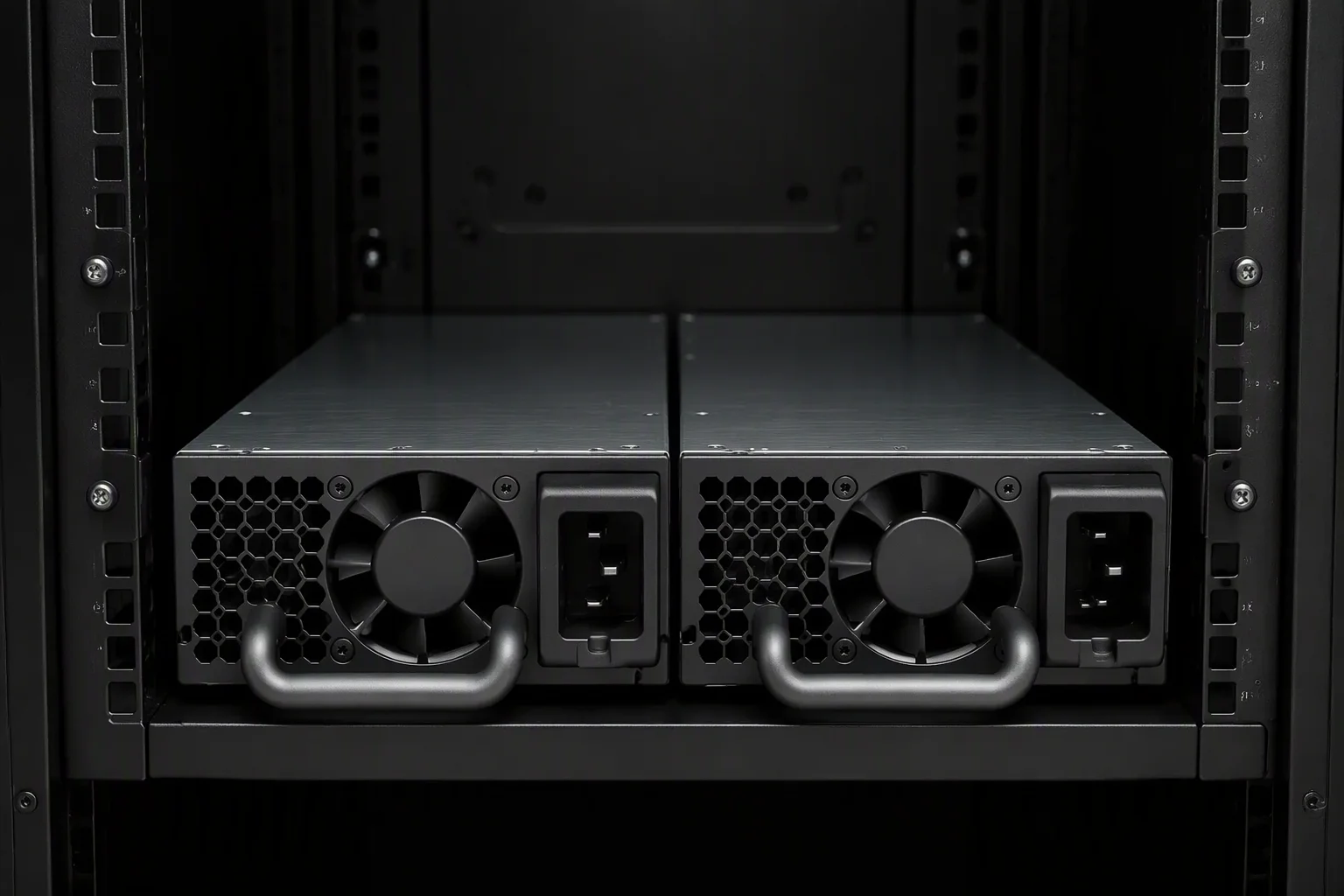
1600W — GPU-Option 2U
For 2U nodes with two or three accelerators, or dense NVMe storage shelves. At 96% efficiency a 1600W unit at half load converts 800W with barely 33W of loss — heat that would otherwise be your rear-exhaust problem.
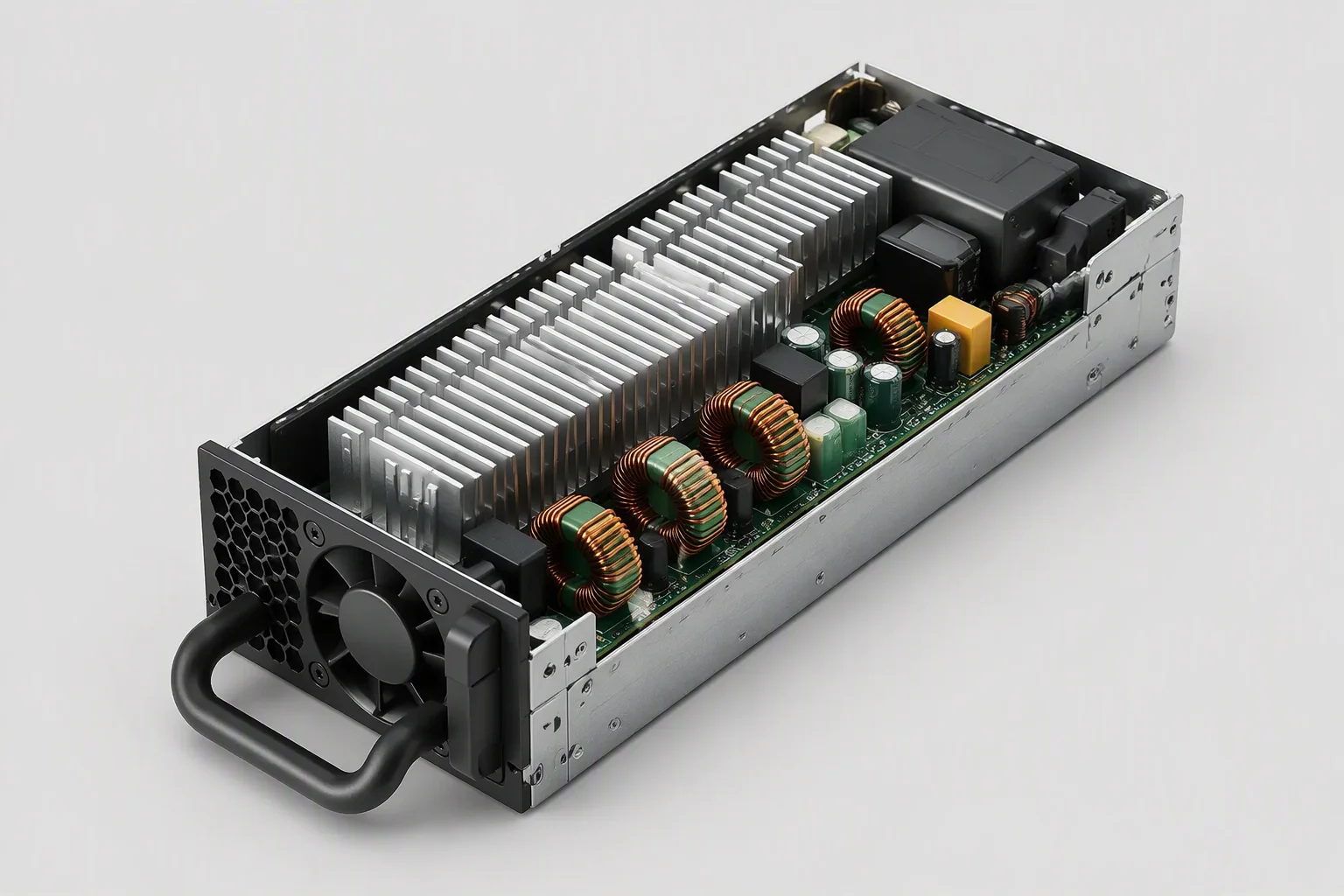
2000W — Front-End Standard
The workhorse rating for GPU front-end arrays: three 2000W units in N+1 feed a node drawing up to 4kW with a full spare. Active current sharing holds all units balanced so no single module carries the ripple peaks alone.
2400W — Envelope Max
The practical ceiling of the classic CRPS-185 12V architecture before the industry moves to modular 54V designs. Pairs with our M-CRPS roadmap: when your node outgrows 12V distribution, the transition path is already defined.
75 Watts Per Cubic Inch, and What It Buys You
Rack units are the scarcest currency in the data center. Pushing density from 40–50 W/in³ to 75 W/in³ class means a 2U GPU server fits its full 4+1 front-end inside the chassis with no add-on shelf — or a storage array dedicates the saved space to another dozen drives. Density is also a cooling statement: higher conversion efficiency plus compact magnetics keep hotspot temperatures inside the −5°C to +55°C continuous-output window, even in rear positions where intake air has already picked up heat from the GPUs ahead of it.
Feeding GPU nodes at 12V
Below roughly 3kW per node, 12V distribution stays economical: a 2000W front-end array feeds VRMs directly, no intermediate bus conversion stage, fewer points of failure. Density and efficiency — not voltage — are the winning levers in this band.
The 2400W boundary
Above 2400W, physics favors higher bus voltage. That is exactly where our development-sample M-CRPS 3000W–5500W program picks up, targeting 54V ORv3 slots — the same golden-finger chassis culture, one voltage class up.
N+1, N+N, and the Modes In Between
Parallel units load-share within a few percent, so N+1 arrays run all modules at low stress instead of one primary aging at full tilt. Share-bus design tolerates hot insertion and pull of any unit.
A standby module stays unpowered until PMBus health telemetry flags degradation in an active unit, then swaps in. This preserves wear-level balance across the fleet and extends effective service intervals.
When a module drops out, the PSU asserts the throttle signal so host firmware can shed non-critical load gracefully — the difference between a routine logged event and an unplanned service window.
Applications
GPU node front-end power
2U–4U accelerator servers in the 3–8kW system class use 1600W–2400W arrays at 12V. PMBus telemetry rolls per-module health into your BMC so a degrading fan or drifting output is a ticket, not a 3 a.m. page.
High-availability storage
Dual-path storage controllers pair these units with N+N cabling across two power domains. Full output to +55°C suits sealed disk-dense drawers where exhaust re-ingestion is unavoidable.
FAQ

Quote the High-Density Series
Send your node power budget and PDU spec — we reply within 48 hours with a recommended array configuration.