M-CRPS 3000W–5500W Modular Power Supplies
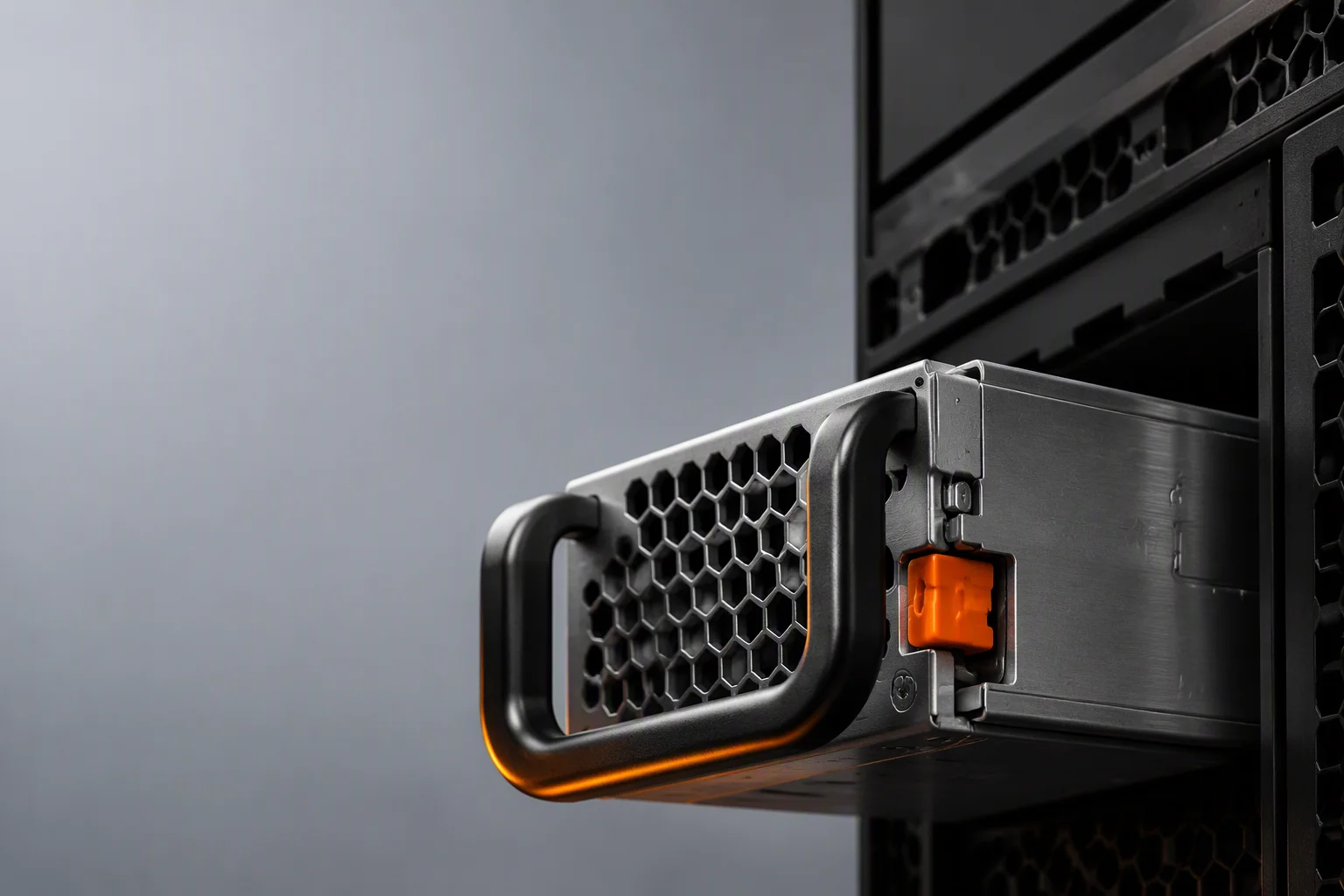
Honest status first: this series is in development-samples stage, not volume production. We are building 3000W, 3300W and 5500W M-CRPS units for joint evaluation with lead customers — the modular power-and-output-section architecture on the OCP M-CRPS path, targeting ORv3 slot compatibility at 54V. Every specification on this page is a target spec, to be frozen together with our development partners, not a shipping datasheet.
Target Specifications (target specs — subject to joint-definition freeze)
| Parameter | Target Spec |
|---|---|
| Rated Power | 3000W / 3300W / 5500W variants under evaluation |
| Efficiency Target | 80 PLUS Titanium class: 96% @ 50% load (230V internal redundant) |
| Input | 200–240Vac single phase, C20 inlet; full output from 200Vac |
| Output Architecture | 54V primary; 12V configuration under evaluation for mixed fleets |
| Form Factor (target) | 73.5 × 40 × 185 mm class, separable power section + output section |
| Protection (target) | Full set: OVP, UVP, OCP, OTP, fan-fault — ORv3 slot-compatible signaling |
| Slot Compatibility | ORv3 slot target — mechanical, connector and hot-plug sequencing |
| Redundancy Target | N+1 / 5+1 arrays with active current sharing; shelf-managed throttling |
| Telemetry Target | PMBus 1.2 over I²C: per-section V/I/T, fan speed, event logging |
| Operating Temp Target | −5°C to +55°C continuous output |
| Status | Development samples for joint evaluation — not in production |
What "Modular" Actually Changes
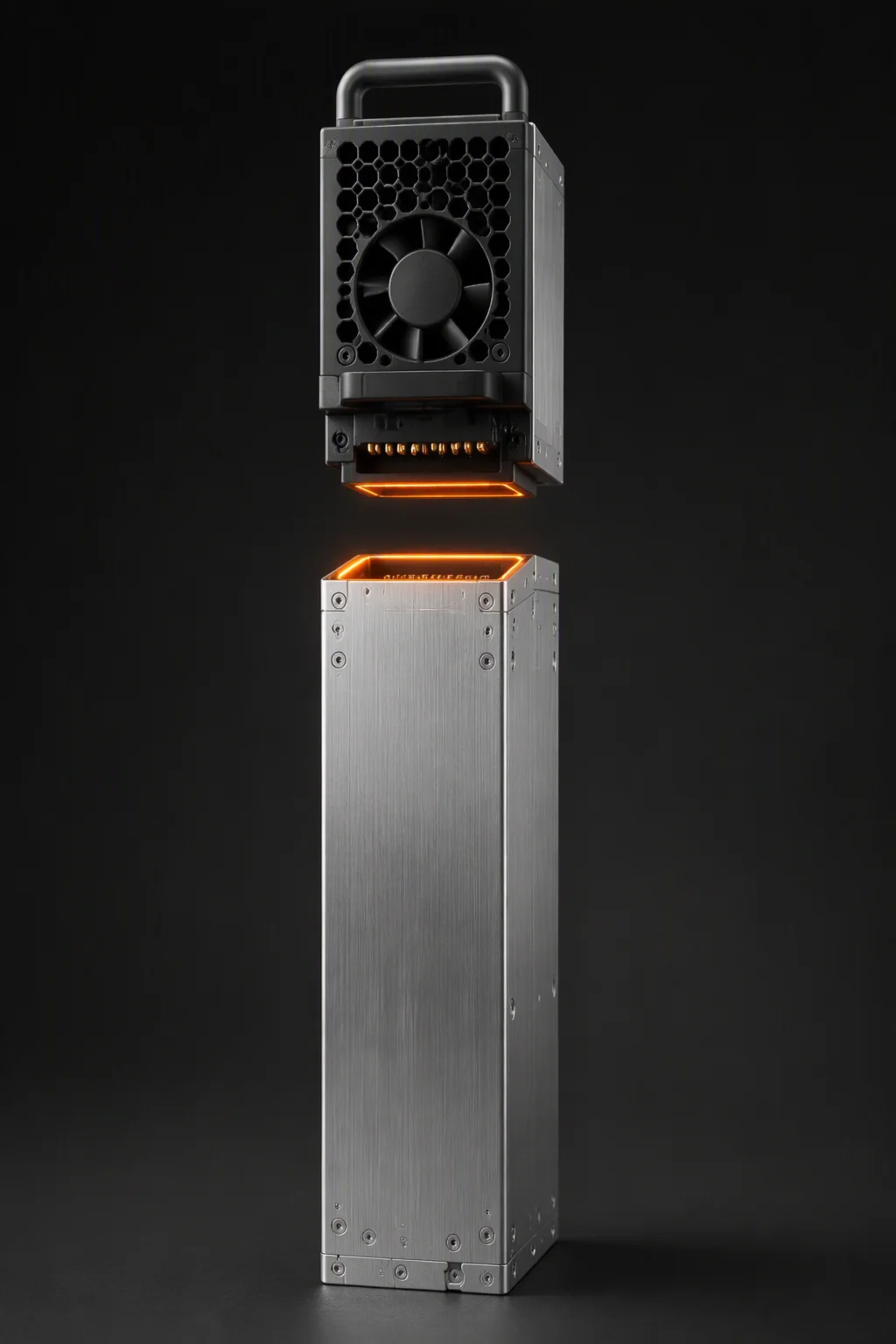
Classic CRPS fixes the power stage and the output interface in one sealed brick. M-CRPS splits the unit into a power section and a configurable output section on a common envelope — so one platform serves a 12V server fleet today and a 54V AI rack tomorrow, with the output block swapped rather than the whole supply requalified. The table below is how the two approaches differ in practice:
| Dimension | Classic CRPS | M-CRPS (this program) |
|---|---|---|
| Output interface | Fixed golden finger | Modular output section, configurable |
| Output voltage | 12V main rail | 54V / 12V per configuration |
| Power band | 550W–2400W (3200W at industry top) | 3000W–5500W target |
| Standards path | Intel CRPS de facto standard | OCP M-CRPS / ORv3 ecosystem |
| Best fit | 1U/2U servers, storage, switches | GPU nodes, ORv3 shelves, hyperscale |
The Joint Development Model
We do not sell vaporware. Instead of promising a generic product date, we co-develop with a small number of lead customers whose requirements freeze the spec. The engagement runs through four gates — deliberately without calendar promises, because the pace is set by your validation depth:
Your power architecture team and ours freeze the target specs: output rail set, ORv3 slot interface details, telemetry command list, thermal budget and derating policy.
First functional samples in your lab. Efficiency curves, sharing behavior and protection response measured against the frozen targets; revisions are fast because power and output sections iterate independently.
Pre-production builds through the full ATE and burn-in chain, plus your system-level hot-plug, EMC and backplane interoperability testing.
Qualification units from the production line with serial-level test records, then volume scheduling. From here the units are catalog parts, not samples.
One Platform, Swappable Output Sections
The development-sample platform separates the power conversion stage from a configurable output section on a common envelope — the architectural step that lets one qualified platform serve 12V fleets today and 54V rack programs next, without requalifying the whole supply.
Why 5.5kW Is the Number That Matters
The ORv3 arithmetic
The ORv3 ecosystem's anchor product is the 33kW power shelf: six 5.5kW PSUs in a 5+1 array. Delta's ORv3 line pairs exactly these ratings — 3kW and 5.5kW PSUs feeding 18kW and 33kW systems. A slot-compatible 5.5kW module is therefore the unit of currency for open-rack power in the AI era.
Why 54V wins at this scale
Moving distribution from 12V to 54V cuts current fourfold and resistive line loss roughly sixteenfold. At multi-kilowatt per node, that difference decides whether your busbar is copper plate or a thermal problem. Our titanium-class conversion efficiency carries through: the 96%-at-50%-load target applies at 54V too.
Early-partner program: development-sample allocation, first access to the frozen target spec set, and a seat in the EVT review loop. Sample builds are scheduled against program slots — contact us for current availability rather than a published date.
FAQ

Join the Early-Partner Program
Co-define the 5.5kW M-CRPS with us — development samples, frozen target specs and a seat in EVT.